Odoo vs other open-source ERP solutions: the pros and cons.
Open-source ERP is attractive for a clear reason: no licence lock-in, full access to the code, and freedom to adapt. Odoo is the best known, but it is not the only option. ERPNext, Tryton, and others compete in the same space. Here is where Odoo stands out among open-source ERPs, and where it asks more of you.

What makes Odoo open source.
Odoo is built on Python and PostgreSQL, with a modular architecture. Its Community edition is free and open source, and a large community, including the OCA, keeps extending it with free modules. A paid Enterprise edition adds extra apps and official support. You get the freedom of open source, with a commercial safety net if you want it. See why we choose Odoo.
Where Odoo stands out among open-source ERPs.
Breadth. Few open-source ERPs match Odoo's range of integrated apps, from accounting to manufacturing to e-commerce.
Interface. Odoo's UX is more polished than most open-source alternatives, which shortens training and speeds adoption.
Ecosystem. A huge module catalogue and a dense partner network, so you are rarely the first to solve a given problem.
Scalability. It runs from a handful of users to large, multi-entity setups on serious infrastructure.
The trade-offs to weigh.
Community support has limits. The free edition relies on the community, not on guaranteed support. For a business-critical system, that is a real consideration.
Depth needs a partner. Getting the most from Odoo, especially with custom work, usually means working with an implementation partner.
Module quality varies. Community modules are not all maintained for every release. They need vetting and upkeep.
How Odoo compares to other open-source ERPs.
ERPNext is lightweight and capable, a fair choice for smaller businesses with in-house technical skills. Tryton is highly modular and technical, aimed at developers. Others are narrower or have small communities. Against this field, Odoo's advantage is the combination of breadth, a modern interface, and a large partner ecosystem, which matters most once a system becomes business-critical.
Where a partner adds value.
Open source removes the licence barrier. It does not remove the work of choosing the right modules, adapting them, and keeping them upgrade-safe. That is where a partner earns its place. As an Odoo Gold Partner in Belgium, we implement Odoo andintegrate it around how your business actually works, so open source stays an advantage rather than a maintenance burden.
Discover what Odoo can do for your business.
An initial meeting to see if we're a good fit, followed by a demonstration tailored to your processes.
More posts like this

5-minute read
Mandatory e-invoicing from 2030: why to start now.
From 1 July 2030, e-invoicing becomes mandatory for B2B in the Netherlands, with digital VAT reporting a year later. What is planned and where to start.
4 min read
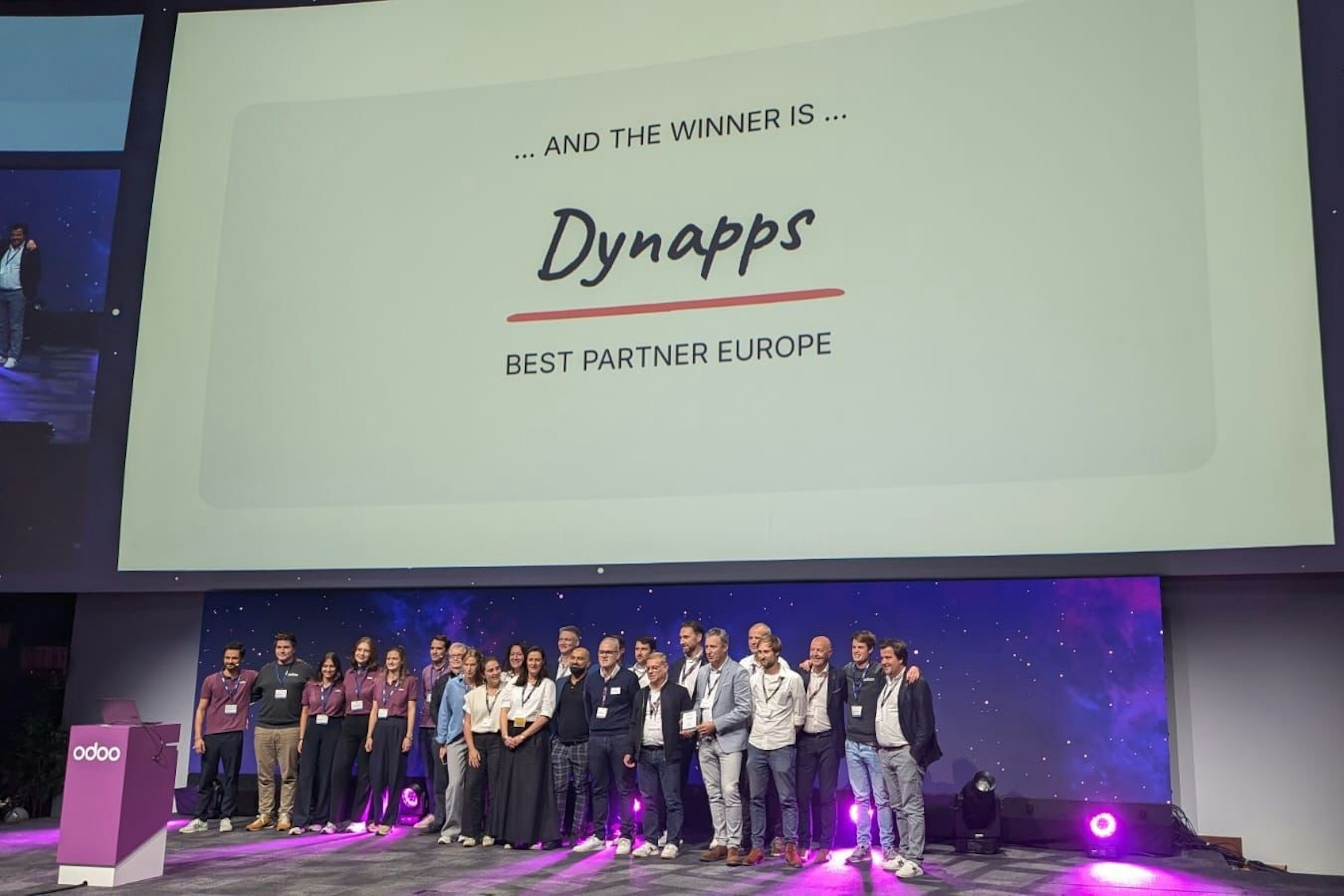
Dynapps named Best Odoo Partner in Europe
At the Odoo Experience Days in Brussels, Dynapps won the title of Best Odoo Implementation Partner in Europe, with former CEO Karel Hendrickx and the team collecting the award on 2–4 October 2024.
3 min read
Dynapps recertified to ISO/IEC 27001:2022 with zero non-conformities
Dynapps holds the ISO/IEC 27001:2022 certificate for its information security management system across its Belgian and Dutch entities. The January 2026 recertification audit closed with zero non-conformities.
4 min read
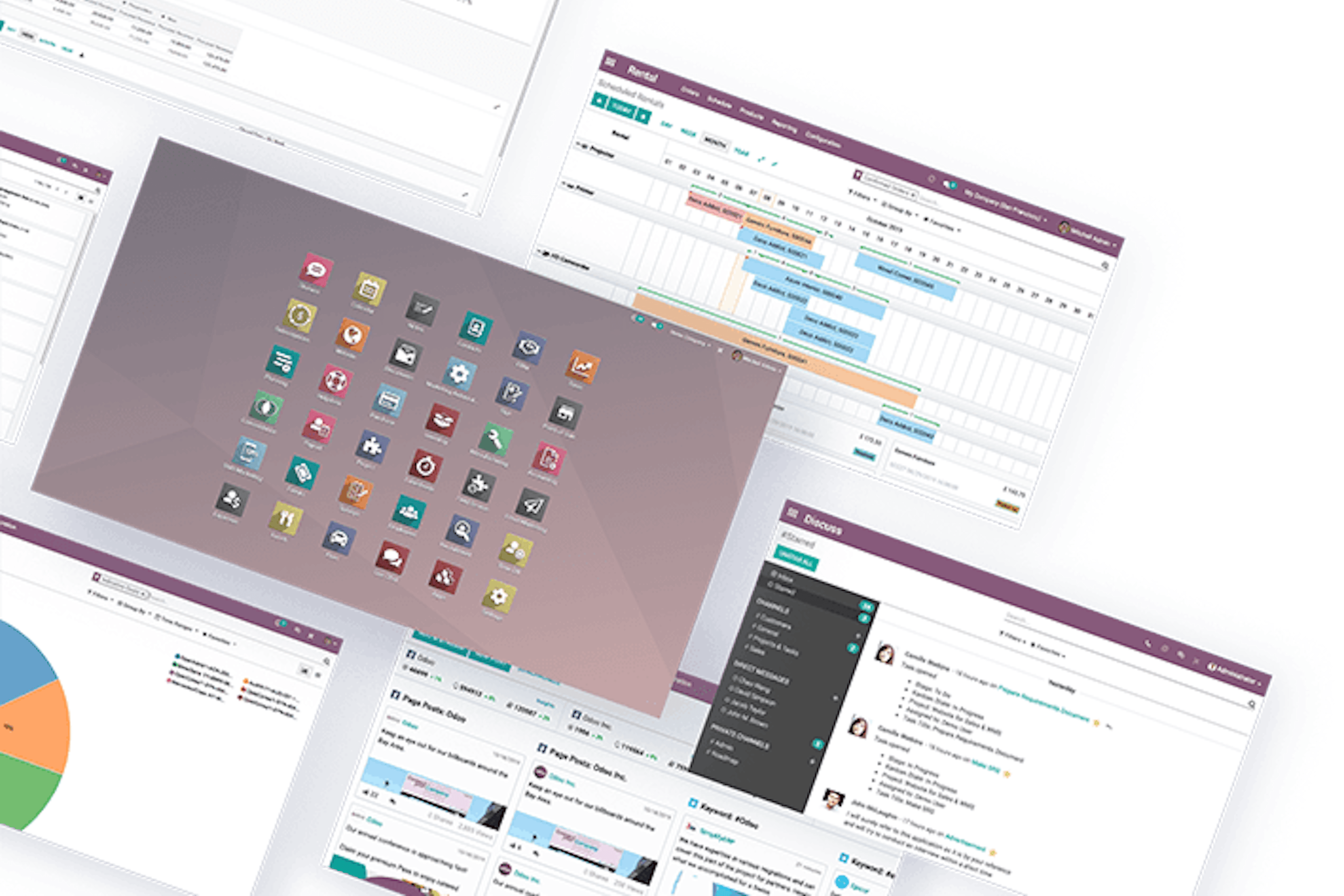
ERP vs CRM: what is the difference?
In a competitive market, businesses lean on software to operate efficiently. Two systems come up most: ERP and CRM. They serve different purposes, and they often work better together than apart.
6 min read
Odoo or Exact: which ERP fits your SME?
Choosing an ERP changes how the business runs. Odoo and Exact both target SMEs, but they solve different problems. This is a side-by-side read on functionality, flexibility, support, and where each one fits.
4 min read
Odoo vs AFAS: comparing two ERP systems built for SMEs in NL and BE
A side-by-side comparison of Odoo and AFAS, two ERP systems built for SMEs in the Netherlands and Belgium. It weighs flexibility, user-friendliness, support, integrations and cost per system.
7-minute read
Digital transformation: what it is, and how to actually do it.
Digital transformation is a worn-out phrase. Behind it sits a real question: does your business still run on disconnected tools, manual steps, and spreadsheets nobody fully trusts? This is what digital transformation actually means, why it matters, how to do it step by step, and the mistakes that sink it. Without the buzzwords.
7-minute read
Odoo AI and ChatGPT: how AI works in your ERP.
Since Odoo 19, AI sits inside the apps you already use, with your own data. What agents do, what Odoo 20 changes, what it costs and where to start.

5-minute read
Odoo vs Dolibarr: which ERP fits your business?
Odoo and Dolibarr are both open-source ERPs, but they aim at different companies. Dolibarr keeps things simple for very small organisations. Odoo goes deeper and scales further. Here is a fair comparison, so you can match the tool to where your business is heading.
5 min read
How Odoo helps you grow and manage your business
Every growing business hits the same wall: the tools that got you here stop keeping up. Separate systems for sales, invoicing, and stock start costing more time than they save. This is how Odoo helps you run and grow the business from one platform, without the overhead of a heavy ERP.