Mandatory e-invoicing from 2030: why to start now.

2030 sounds far away. Many Belgian companies thought the same about Peppol, until the obligation started on 1 January 2026. In the Netherlands, the date is now set as well. On 11 September 2026, the State Secretary for Finance presented the outline letter on e-invoicing and digital VAT reporting.
This post covers what is planned, which steps still follow and why four years is shorter than it looks.
What is in the plans?
From 1 July 2030, e-invoicing becomes mandatory for B2B transactions, both within the Netherlands and with other EU countries. The Netherlands goes beyond the European minimum of ViDA (VAT in the Digital Age), which only covers intra-EU transactions.
From the same date, you report intra-EU transactions digitally. For domestic B2B transactions, digital VAT reporting follows on 1 July 2031.
The standard is the European norm EN 16931, without additional Dutch requirements. There is no separate exemption for micro-businesses. The deadline for issuing an invoice is shortened to ten days after the delivery or the service.
What still has to happen?
For now, these are plans. A public internet consultation on the bill follows this autumn. The government aims to submit the bill to the House of Representatives before the 2027 summer recess and to complete the parliamentary process before 1 July 2028. Details can still change.
Why four years is shorter than it looks.
An e-invoice is not a PDF. It is a structured file that your customer's accounting software reads without retyping. That only works if the data behind it is right: VAT numbers, VAT codes and customer data.
With digital VAT reporting, that data also goes to the Dutch Tax Administration. If your invoicing is spread across several systems, or your master data contains errors, there is more work than a connector. That work is better done in 2027 than in spring 2030.
Do you already invoice Belgian customers?
Then Peppol matters today. Since 1 January 2026, VAT-registered companies in Belgium send and receive their B2B invoices via Peppol. The obligation does not apply to foreign companies without a permanent establishment in Belgium. If you have a Belgian entity, it does apply to that entity.
How e-invoicing works in Odoo.
Odoo is a Peppol access point itself.
You do not need a separate service provider. You register your company in Odoo with your Chamber of Commerce (KvK) number or VAT number. Registration is free, also in Odoo Community.
The Dutch standard is built in.
Odoo supports Peppol BIS Billing 3.0 and NLCIUS, the Dutch implementation of the European norm. When you send an invoice, you choose Peppol, and Odoo sends the file to your customer's Peppol address.
Receive without retyping.
Vendor bills arrive automatically in your purchase journal. Odoo checks for new documents several times a day.
One chain from order to booking.
Sales, purchase, inventory and accounting share one database. The invoice comes from the same data as the order, and that is the basis for digital reporting. How accounting works in Odoo is on Odoo Finance.
Where do you start?
Map which systems your invoices leave from today.
Review your master data: VAT numbers, KvK numbers and VAT codes.
Start sending e-invoices via Peppol now to customers who support it, and certainly to Belgian customers.
Decide whether your current tool can handle digital reporting from 2030.
Plan any move to Odoo well before 2030.
Why Dynapps?
Dynapps is an Odoo Gold partner with 900+ customer references and 280+ Odoo experts across 13 offices in 5 European countries, including the Netherlands and Belgium. We set up e-invoicing as part of your order-to-invoice process, not as a standalone link. If you operate in both countries, you handle it in one database.
Frequently asked questions about e-invoicing in the Netherlands.
When does e-invoicing become mandatory in the Netherlands?
According to the government plans, from 1 July 2030, for B2B transactions within the Netherlands and with other EU countries. That is in the outline letter the State Secretary for Finance presented on 11 September 2026. From the same date, you report intra-EU transactions digitally. Digital VAT reporting for domestic B2B transactions follows on 1 July 2031. The bill still has to pass parliament, so details can still change.
What is ViDA?
ViDA stands for VAT in the Digital Age, a European package that adapts VAT rules to digital trade. One part is mandatory structured e-invoicing for intra-EU B2B transactions from 1 July 2030, with digital reporting. The Netherlands goes beyond that European minimum and makes e-invoicing mandatory for domestic B2B invoices from the same date.
Is a PDF invoice still valid?
Not for B2B once the obligation starts. A PDF is a picture of an invoice. An e-invoice is a structured file under the European standard EN 16931 that your customer's accounting software reads automatically. Until 2030, a PDF remains valid in the Netherlands. Belgian VAT-registered companies already expect a Peppol invoice today.
What changes in the invoicing deadline?
The plans shorten the deadline for issuing an invoice to ten days after the delivery of the goods or the service. If you send monthly summary invoices today, check whether that process fits the new deadline. Map how long it takes today between delivery and invoice.
Can Odoo send and receive e-invoices?
Yes. Odoo is a Peppol access point itself, so you do not need a separate service provider. You register your company with your Chamber of Commerce (KvK) number or VAT number, and registration is free, also in Odoo Community. Odoo supports Peppol BIS Billing 3.0 and NLCIUS, the Dutch implementation of the European norm. Vendor bills arrive automatically in your purchase journal.
Discover what Odoo can do for your business.
A first conversation to see if we fit, followed by a demo built around your processes.
More posts like this
4 min read
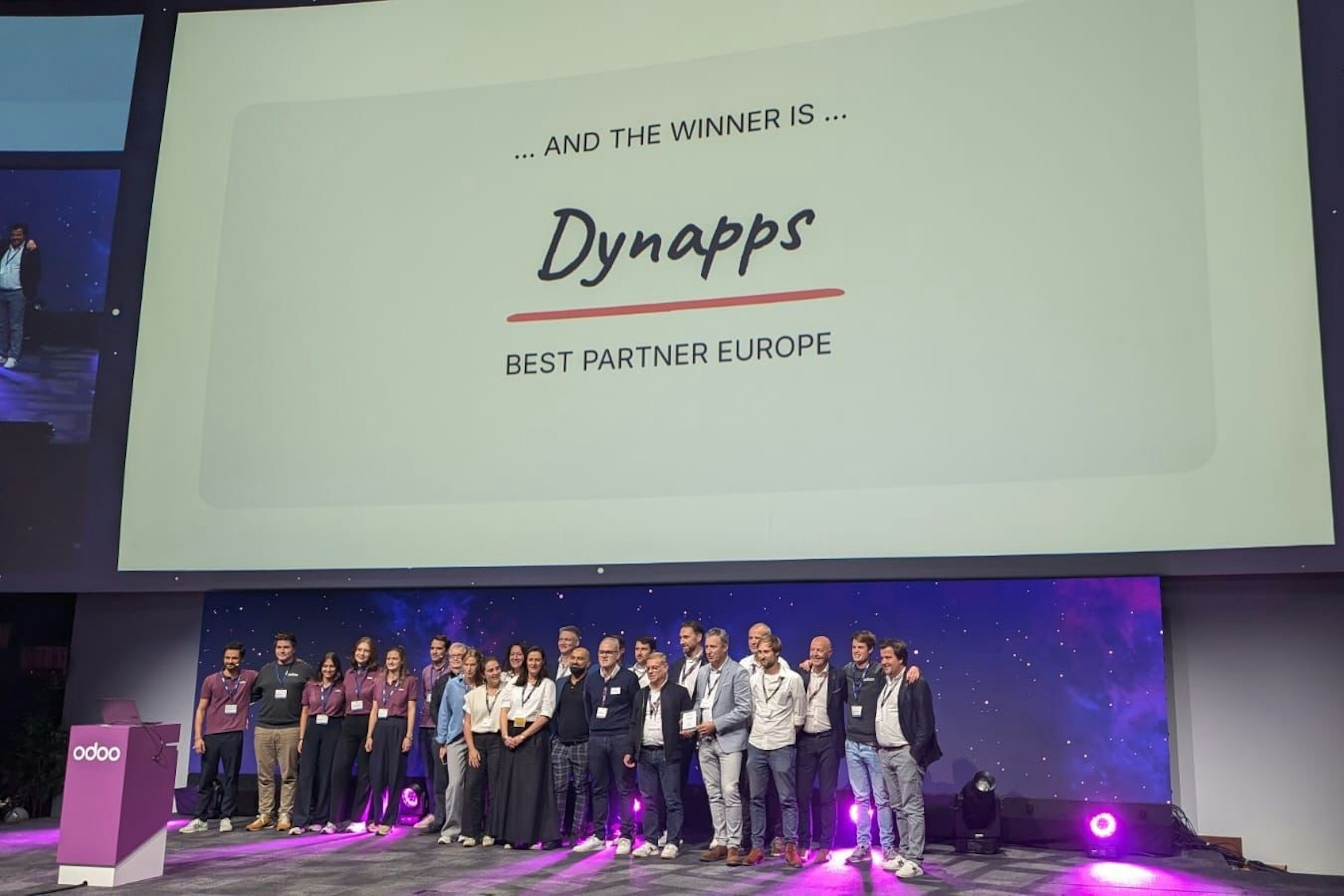
Dynapps named Best Odoo Partner in Europe
At the Odoo Experience Days in Brussels, Dynapps won the title of Best Odoo Implementation Partner in Europe, with former CEO Karel Hendrickx and the team collecting the award on 2–4 October 2024.
3 min read
Dynapps recertified to ISO/IEC 27001:2022 with zero non-conformities
Dynapps holds the ISO/IEC 27001:2022 certificate for its information security management system across its Belgian and Dutch entities. The January 2026 recertification audit closed with zero non-conformities.
4 min read
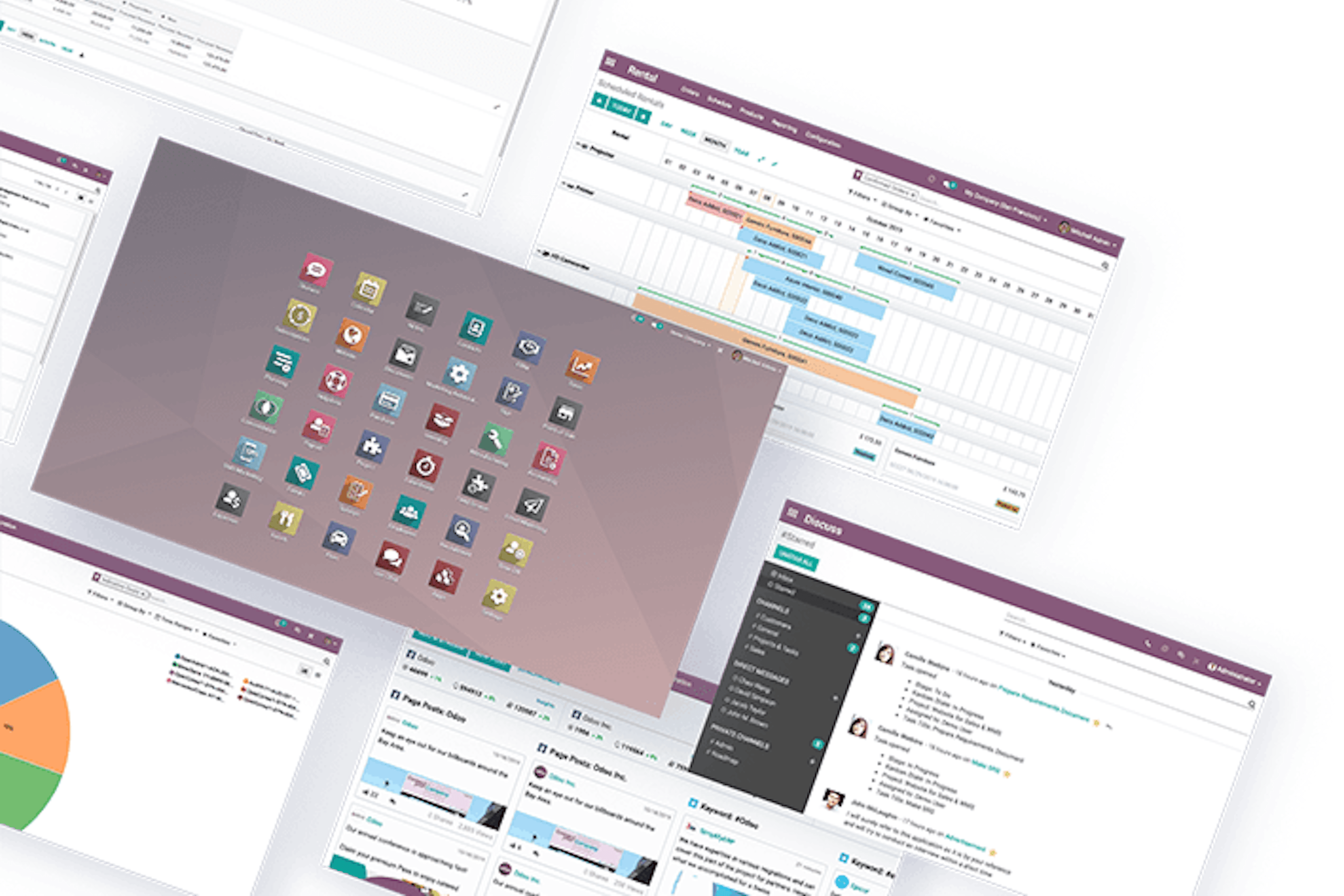
ERP vs CRM: what is the difference?
In a competitive market, businesses lean on software to operate efficiently. Two systems come up most: ERP and CRM. They serve different purposes, and they often work better together than apart.
6 min read
Odoo or Exact: which ERP fits your SME?
Choosing an ERP changes how the business runs. Odoo and Exact both target SMEs, but they solve different problems. This is a side-by-side read on functionality, flexibility, support, and where each one fits.
4 min read
Odoo vs AFAS: comparing two ERP systems built for SMEs in NL and BE
A side-by-side comparison of Odoo and AFAS, two ERP systems built for SMEs in the Netherlands and Belgium. It weighs flexibility, user-friendliness, support, integrations and cost per system.
7-minute read
Digital transformation: what it is, and how to actually do it.
Digital transformation is a worn-out phrase. Behind it sits a real question: does your business still run on disconnected tools, manual steps, and spreadsheets nobody fully trusts? This is what digital transformation actually means, why it matters, how to do it step by step, and the mistakes that sink it. Without the buzzwords.
7-minute read
Odoo AI and ChatGPT: how AI works in your ERP.
Since Odoo 19, AI sits inside the apps you already use, with your own data. What agents do, what Odoo 20 changes, what it costs and where to start.

5-minute read
Odoo vs Dolibarr: which ERP fits your business?
Odoo and Dolibarr are both open-source ERPs, but they aim at different companies. Dolibarr keeps things simple for very small organisations. Odoo goes deeper and scales further. Here is a fair comparison, so you can match the tool to where your business is heading.
5 min read
How Odoo helps you grow and manage your business
Every growing business hits the same wall: the tools that got you here stop keeping up. Separate systems for sales, invoicing, and stock start costing more time than they save. This is how Odoo helps you run and grow the business from one platform, without the overhead of a heavy ERP.
6-minute read
The benefits of using Odoo for supply chain management
A supply chain works when information, stock, and money move together. It breaks when they live in separate systems that do not talk. This is how Odoo pulls supply chain management into one platform, and where the real benefits land.