From SAP Business One to Odoo: how the migration works.
SAP Business One is a proven ERP. Companies run it reliably for years, and still reach a point where they ask whether it fits the next ten years. Licence costs, changes that need a consultant, or a shift in SAP's own roadmap can all start that question.
This post shows how a migration from SAP Business One to Odoo runs, what moves across, and what Ecopower learned when it replaced SAP with Odoo.
Why companies move from SAP Business One to Odoo.
SAP Business One fits companies with the budget and the timeline for a large, structured implementation. The trade-off is cost and pace: projects run long, and changes often need a consultant. Odoo reaches go-live faster and lets an administrator adjust fields and reports with Studio, at a lower total cost of ownership. Read the full comparison of Odoo and other ERP systems.
How the migration runs.
Replace what you use today first.
A migration is not the moment to rebuild everything SAP was ever configured to do. Start with the processes you run today in standard Odoo, and add new ambitions once that runs. Customise only where the shape of your business makes it necessary.
Our first steps.
Every Odoo implementation with Dynapps starts the same way:
Discovery. A first conversation to understand your situation, your challenges, and your ambitions.
Tailored demo. Not a generic product tour, but a demo shaped around your operations and the challenges you described.
Blueprint proposal. A concrete offer for the blueprint phase: scope, approach, timeline, investment.
Project kick-off. Process mapping, fit-gap analysis and solution design.
Data that moves across.
We export your customers, invoices and products from SAP Business One, clean them up and load them into Odoo.
Plan the go-live around fixed dates.
If your go-live falls close to a fixed date, such as a legal deadline, plan both as separate critical paths that land on the same day.
Case: how Ecopower replaced SAP with Odoo.
Ecopower is a Belgian citizen energy cooperative with 73,000 members, generating wind, solar and heat. It had run its back office on SAP since 2019. When SAP's cloud strategy for mid-market customers became clear in early 2024, Ecopower used the moment to re-evaluate both the ERP and the partner.
The kick-off with Dynapps followed at the end of 2024. Member administration and AGM registrations ran through Odoo in 2025, nine months before the official go-live. The go-live came in 2026, with Peppol e-invoicing live on the same day.

Ecopower now runs CRM, sales, invoicing and accounting, projects and approval workflows in standard Odoo. Two pieces went beyond standard: a cooperative shareholder register built in Odoo, and a real-time integration with its electricity-contract platform.
The complexity was underestimated on both sides, which added cost during the project. What kept it on track was transparency on scope, timing and cost whenever adjustments were needed.
Odoo gives you a standard working platform. A partner like Dynapps makes sure it is tuned to the details of how your business actually runs.
Dirk Hermans, ICT lead and project manager at Ecopower
Read the full Ecopower case.
Why Dynapps?
We are an Odoo Gold partner with 280+ Odoo experts and 900+ customer references in five countries. We start from standard Odoo and set it up around how your company works, from the first conversation to go-live.
Everything you need to know about moving from SAP Business One to Odoo.
SAP Business One fits large, structured implementations, but projects run long and changes often need a consultant. Odoo reaches go-live faster, lets an administrator adjust fields and reports with Studio, and has a lower total cost of ownership.
We export your customers, invoices and products from SAP Business One, clean them up and load them into Odoo.
No. We replace what you use today first, in standard Odoo, and customise only where the shape of your business makes it necessary. New ambitions follow once that runs.
Yes. Ecopower went live on Odoo with Peppol e-invoicing on the same day. Plan both as separate critical paths that land on the same date.
With four steps: a discovery conversation, a tailored demo, a blueprint proposal with scope, approach, timeline and investment, and the project kick-off.
Discover what Odoo can do for your business.
A first conversation to see if we fit, followed by a demo built around your processes.
More posts like this
3-minute read
Connect Odoo to Power BI: real-time dashboards from your ERP.
The routes from Odoo to Power BI, what each one needs, and when Odoo's own reporting is enough.

3-minute read
Odoo for installation companies: from quote to maintenance.
How installation companies run quotes, technician planning, work orders, invoicing and maintenance on one Odoo platform.
3-minute read
Odoo vs Teamleader: which one fits your company?
What Odoo and Teamleader each cover, how they differ on accounting, stock and Peppol, and when each one is the better fit.

3-minute read
Odoo for accounting firms: time tracking, client files and invoicing.
How Odoo brings time tracking per client file, document management and invoicing together for accounting and administration firms.

5-minute read
Mandatory e-invoicing from 2030: why to start now.
From 1 July 2030, e-invoicing becomes mandatory for B2B in the Netherlands, with digital VAT reporting a year later. What is planned and where to start.
6 minute read
Choosing an Odoo integrator: 5 questions to ask
There are generally five main criteria that can help you effectively evaluate Odoo integrators. However, a reliable assessment depends first and foremost on what you’ve prepared before the call.
4 min read
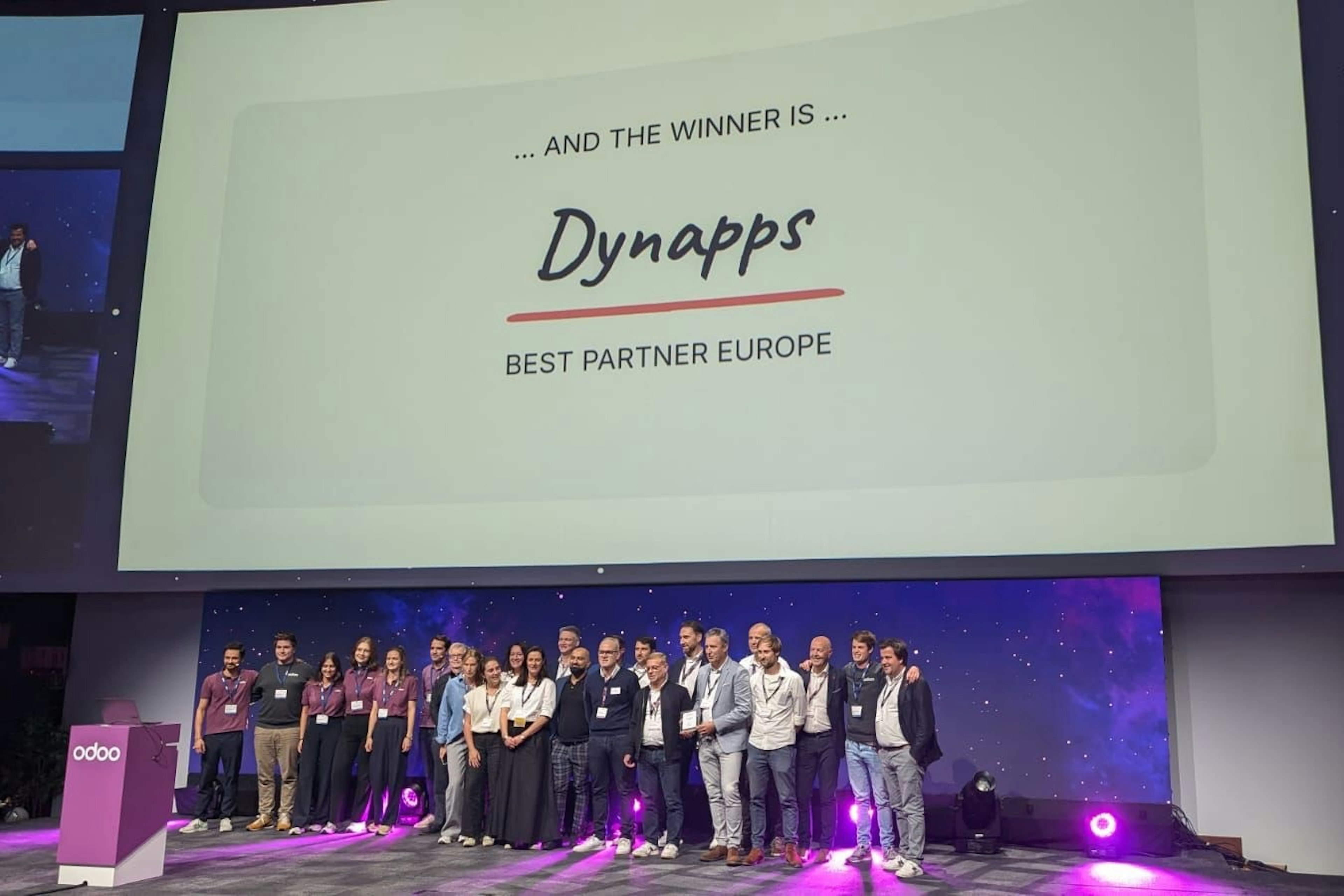
Dynapps named Best Odoo Partner in Europe
At the Odoo Experience Days in Brussels, Dynapps won the title of Best Odoo Implementation Partner in Europe, with former CEO Karel Hendrickx and the team collecting the award on 2–4 October 2024.
3 min read
Dynapps recertified to ISO/IEC 27001:2022 with zero non-conformities
Dynapps holds the ISO/IEC 27001:2022 certificate for its information security management system across its Belgian and Dutch entities. The January 2026 recertification audit closed with zero non-conformities.
4 min read
ERP vs CRM: what is the difference?
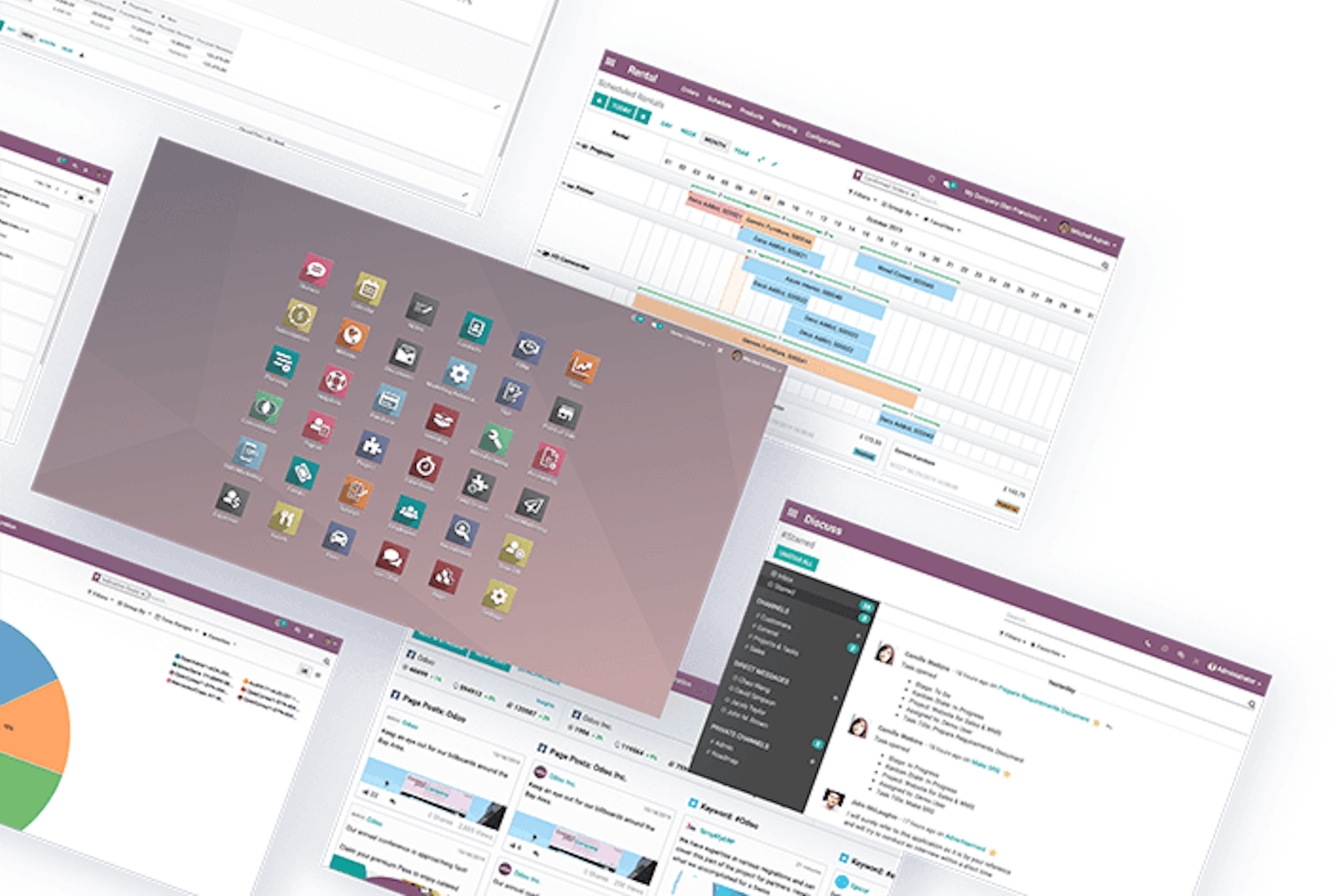
In a competitive market, businesses lean on software to operate efficiently. Two systems come up most: ERP and CRM. They serve different purposes, and they often work better together than apart.
6 min read
Odoo or Exact: which ERP fits your SME?
Choosing an ERP changes how the business runs. Odoo and Exact both target SMEs, but they solve different problems. This is a side-by-side read on functionality, flexibility, support, and where each one fits.