Odoo vs ERPNext: which open-source ERP fits your business?
Odoo and ERPNext are two of the most popular open-source ERPs. Both cover sales, accounting, inventory, HR, and more. But they are not the same, and the difference shows in the community around them, the interface, and how far each scales. Here is a fair comparison to help you choose.

What is Odoo?
Odoo is a modular open-source ERP that integrates CRM, accounting, purchasing, manufacturing, HR, e-commerce, and more in one platform. Its modular design supports a phased rollout at your own pace. It comes in two editions: Community (free, open source) and Enterprise (paid, with extra apps and official support).
What is ERPNext?
ERPNext is an open-source ERP built by Frappe Technologies on the Frappe framework (Python). It covers a broad set of business functions and runs either self-hosted or on a cloud subscription (Frappe Cloud). It is lightweight and capable, with a smaller community and partner network than Odoo.
The comparison, point by point.
Flexibility and customisation
Both are open source and customisable. Odoo has a modular, scalable architecture and a large developer community, including the OCA, plus deep customisation of views, logic, and processes. ERPNext is customisable through the Frappe framework, with a different learning curve and a smaller ecosystem of developers to draw on.
Interface and user experience
Odoo is known for a modern, visual interface with Kanban, calendar, Gantt, and list views, and it works well on mobile. ERPNext is functional but more technical, and teams new to ERP usually need more time to get comfortable with it.
Community, support, and partners
Odoo has a large global community, an established network of certified partners, and professional support from Odoo S.A. ERPNext has a growing community, but fewer specialised partners, with support mainly from Frappe or independent vendors. In Belgium specifically, the Odoo partner network is far denser.
Pricing
Odoo Community is free; Enterprise is a paid per-user subscription. ERPNext is free to self-host, with a paid cloud subscription for managed hosting. For a simple project ERPNext can be cheaper to run, but licence cost is only part of the total: implementation, hosting, and support matter more over the life of the system.
Scalability
Odoo handles advanced setups, multiple databases, staging environments, and high-performance infrastructure. ERPNext works well for small and mid-sized businesses, but scaling to many users or heavy customisation can take more effort.
Pros and cons at a glance.
Odoo. Powerful, scalable, modern interface, huge module ecosystem, dense partner network. Downside: complex projects need a partner, and some advanced features are Enterprise-only.
ERPNext. Open source, free to self-host, solid for smaller businesses, a framework built around good practices. Downside: less polished interface, a smaller community, and more effort to scale or find local support.
Which one fits you?
If you have a strong in-house technical team, a limited budget, and straightforward needs, ERPNext is a reasonable choice. If you want a modern platform, room to scale, a deep module ecosystem, and a partner close by, Odoo is the stronger fit for most mid-market companies. As an Odoo Gold Partner in Belgium, we implement Odoo around how your business actually runs, and integrate it with your existing tools.
Descubre lo que Odoo puede hacer por tu empresa.
Una charla inicial para ver si encajamos bien y una demostración adaptada a tus procesos.
More posts like this

5-minute read
Mandatory e-invoicing from 2030: why to start now.
From 1 July 2030, e-invoicing becomes mandatory for B2B in the Netherlands, with digital VAT reporting a year later. What is planned and where to start.
4 min read
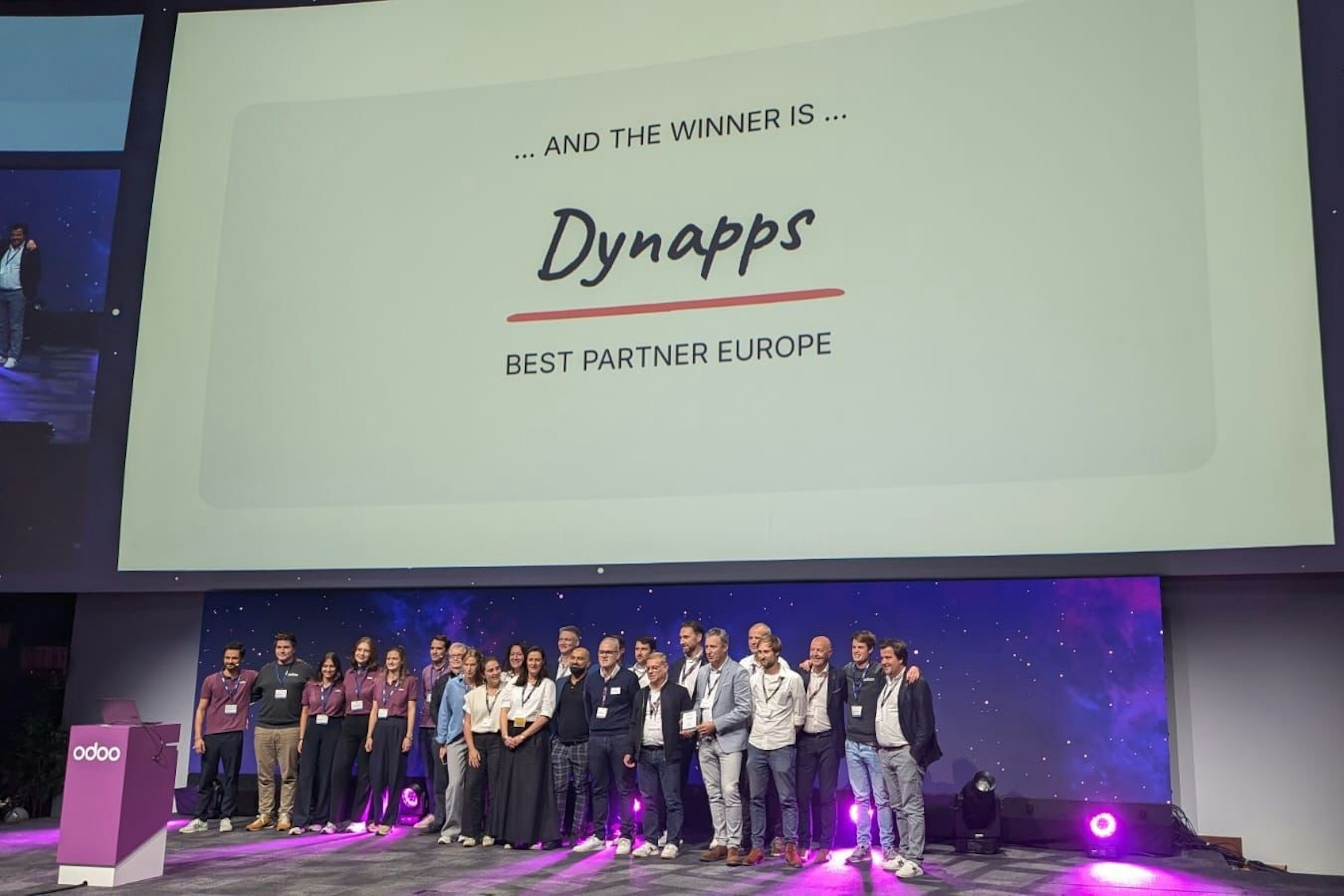
Dynapps named Best Odoo Partner in Europe
At the Odoo Experience Days in Brussels, Dynapps won the title of Best Odoo Implementation Partner in Europe, with former CEO Karel Hendrickx and the team collecting the award on 2–4 October 2024.
3 min read
Dynapps recertified to ISO/IEC 27001:2022 with zero non-conformities
Dynapps holds the ISO/IEC 27001:2022 certificate for its information security management system across its Belgian and Dutch entities. The January 2026 recertification audit closed with zero non-conformities.
4 min read
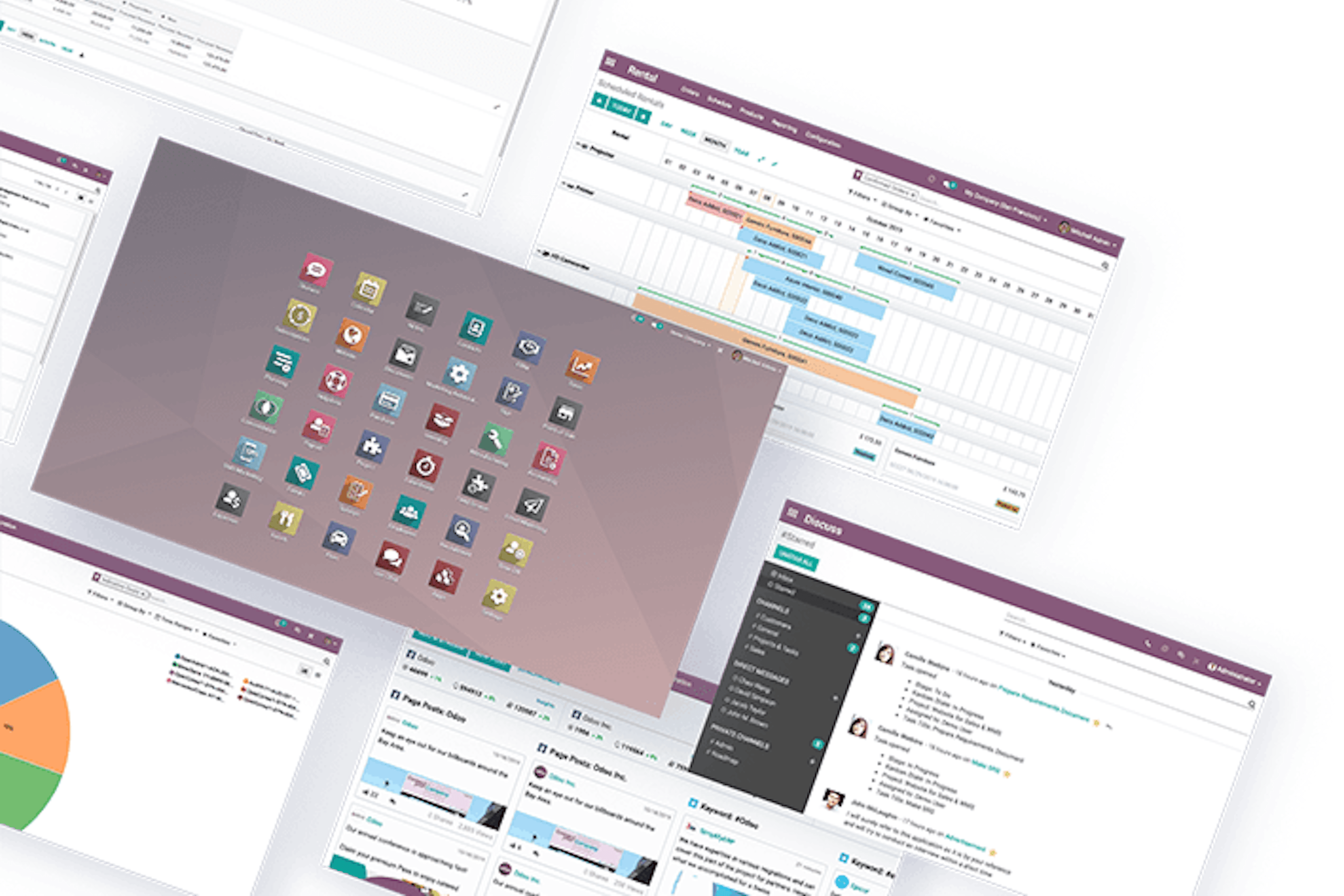
ERP vs CRM: what is the difference?
In a competitive market, businesses lean on software to operate efficiently. Two systems come up most: ERP and CRM. They serve different purposes, and they often work better together than apart.
6 min read
Odoo or Exact: which ERP fits your SME?
Choosing an ERP changes how the business runs. Odoo and Exact both target SMEs, but they solve different problems. This is a side-by-side read on functionality, flexibility, support, and where each one fits.
4 min read
Odoo vs AFAS: comparing two ERP systems built for SMEs in NL and BE
A side-by-side comparison of Odoo and AFAS, two ERP systems built for SMEs in the Netherlands and Belgium. It weighs flexibility, user-friendliness, support, integrations and cost per system.
7-minute read
Digital transformation: what it is, and how to actually do it.
Digital transformation is a worn-out phrase. Behind it sits a real question: does your business still run on disconnected tools, manual steps, and spreadsheets nobody fully trusts? This is what digital transformation actually means, why it matters, how to do it step by step, and the mistakes that sink it. Without the buzzwords.

7-minute read
Odoo AI and ChatGPT: how AI works in your ERP.
Since Odoo 19, AI sits inside the apps you already use, with your own data. What agents do, what Odoo 20 changes, what it costs and where to start.

5-minute read
Odoo vs Dolibarr: which ERP fits your business?
Odoo and Dolibarr are both open-source ERPs, but they aim at different companies. Dolibarr keeps things simple for very small organisations. Odoo goes deeper and scales further. Here is a fair comparison, so you can match the tool to where your business is heading.
5 min read
How Odoo helps you grow and manage your business
Every growing business hits the same wall: the tools that got you here stop keeping up. Separate systems for sales, invoicing, and stock start costing more time than they save. This is how Odoo helps you run and grow the business from one platform, without the overhead of a heavy ERP.