
Odoo unifies three Obiz Group entities within twelve months.
How an acquired company’s ERP choice became the backbone of the entire Obiz Group, and what it took to extend it past the parent’s own finance team.

Sector
Services. Relationship marketing and customer loyalty.
Footprint
France. Three group entities (Obiz, HA plus PME, Ski Loisirs Diffusion).
Scale
~30,000 accounting entries/year at both Obiz and Adelya; Ski Loisirs Diffusion an order of magnitude larger.
Dynapps partner
Since 2023.
Backing
Public. Euronext Growth Paris (ticker ALBIZ) since May 2021.
Before Dynapps stepped in.
By the spring of 2022, Obiz, a Lyon-based relationship-marketing and loyalty platform listed on Euronext Growth Paris the year before, had just closed its first acquisition: Adelya, a customer-loyalty and NFC pioneer based in Toulouse. That deal made Obiz the parent of a smaller, more technical company that had already done something Obiz itself had not: chosen an ERP. Adelya had selected Odoo, and a French integrator (Scopea, now Dynapps France) to roll it out across project management, CRM, sales, purchasing, HR and the rest.
Then, later that year, Leïla Chojnacki joined Obiz as Directrice Générale Adjointe and Directrice Financière. She already knew Odoo from a previous role at an IT-service firm. Within months she was asking the question that decides whether a group acquisition becomes one company or stays two: should the rest of the group, Obiz itself, HA plus PME, Ski Loisirs Diffusion, come onto the same platform?
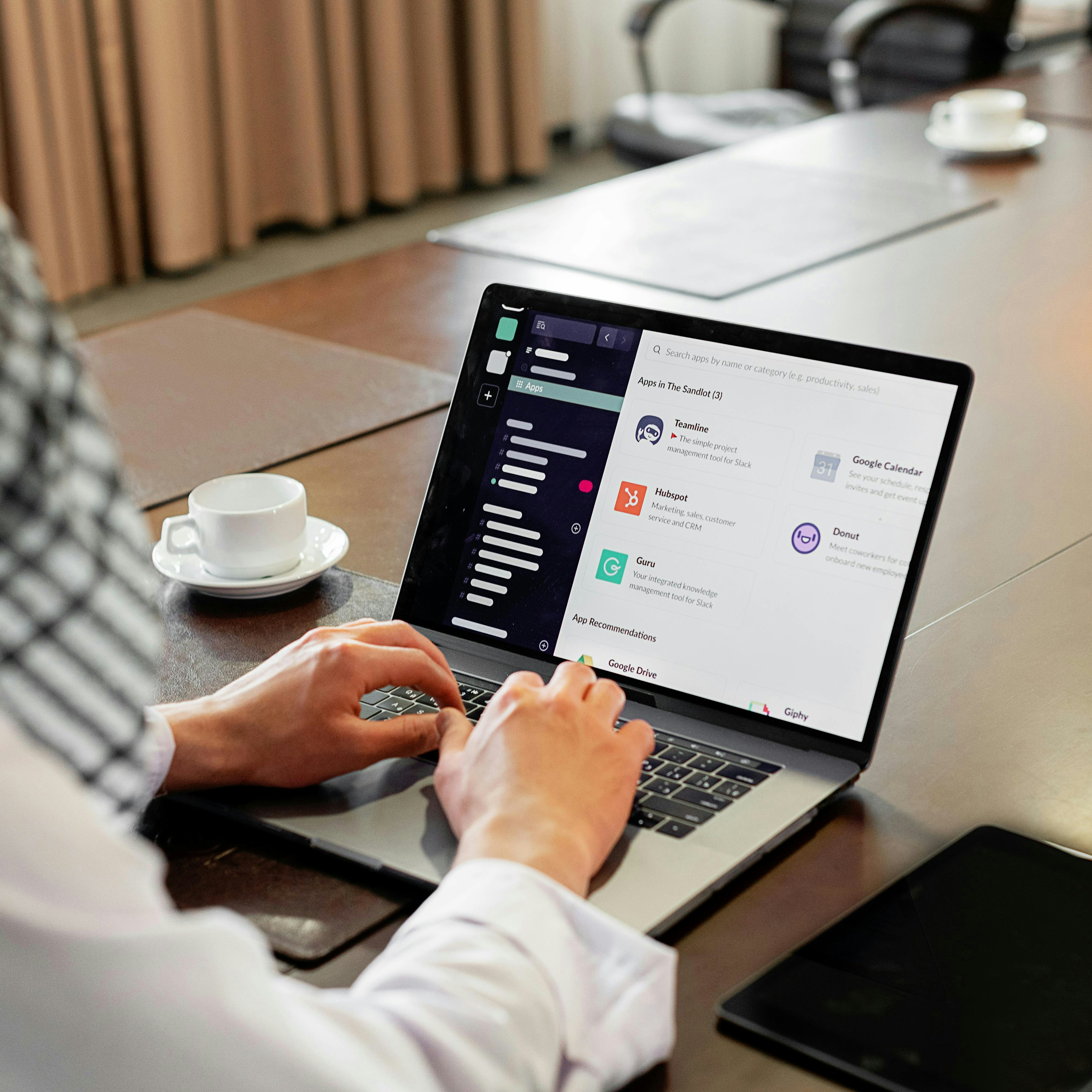
Why Obiz extended its acquired company’s Odoo to the whole group.
The catalyst was already in the room. Adelya's Odoo project, signed before the acquisition, kept moving. When Leïla arrived at Obiz in 2022, the choice was not whether to pick an ERP, but how widely to apply the one a newly acquired subsidiary had already chosen. Three paths were on the table.
Leave Adelya on Odoo, keep Obiz on its existing tools
Obiz would have spent its first integrated year reconciling two operational realities instead of running one.
Pick a different ERP for the parent and integrate at the data layer
Stayed in the running until the cost of two parallel implementations, plus a permanent integration layer between them, was put against the cost of extending what was already running.
Extend Adelya’s Odoo, and Scopea, to the rest of the group
Leïla had already been convinced by Odoo in a previous role; the existing relationship with Scopea was producing results at Adelya; and a focused scope on three processes (accounting, purchasing, sales) made a twelve-month rollout credible.

How the rollout really happened
How Obiz put three group entities on one Odoo in twelve months.
2021
Adelya selects Odoo and Scopea, before the acquisition.
2022
Obiz finalises the acquisition of Adelya. Leïla Chojnacki joins as DGA / DAF.
2023
Obiz (parent) goes live on Odoo with Dynapps France. Group acquires Ski Loisirs Diffusion; rollout scope extended.
2025
SLD goes live on Odoo, handling around 200,000 orders per month.
What the Obiz Group runs on Odoo: accounting, purchasing, sales and subscriptions.
The Obiz rollout went live in twelve months because the scope was tight. Three processes carried the entire first wave: accounting, purchasing, then sales, deployed in that order on William's recommendation, against Leïla's initial instinct to do sales first. Historical 2022 accounting data was migrated in early, the team closed the 2022 financial year on the old basis and started 2023 directly on Odoo. Vendor invoices stopped being typed in by hand, with automatic recognition and pre-accounting doing most of the work and bank connections closing the loop. The Subscriptions module became central, the way the group manages recurring commercial relationships, alongside the Purchase module that runs and tracks day-to-day orders. Accruals and accrued-expenses calculations were automated. Two consultants on the Dynapps France side, two interlocutors on the Obiz side.
Modules: Accounting, purchase, sales, subscriptions.
The discipline throughout.
Out-of-the-box Odoo first. Dynapps France's read of the Obiz scope was that no specific developments were needed; standard configuration could carry it, and that call held. In Leïla's own retrospective, the team 'challenged us to optimise our processes and avoid unnecessary specific developments.' That is the principle that ran through every decision, and it is what made the twelve-month timeline credible.

The hard part was the discipline of being told no.
Acquiring a company, integrating its teams and changing tools at the same time, across three entities at once, was a weight on the Obiz, Adelya and SLD teams. The most delicate moment was not technical. Mid-project, the principal interlocutor on the customer side changed.
The project carried a political weight. Organisational decisions, scope boundaries and habits inherited from three different entities all met in the same room. The change of single point of contact forced the team to rebuild the mandate, re-align trade-offs that had already been made, and hold the line on the out-of-the-box discipline while the temptation to reopen closed questions was at its strongest.

The Dynapps team challenged us to optimise our processes and avoid unnecessary specific developments. Their approach let us structure our ERP efficiently and anticipate the next steps.
Leïla Chojnacki
Deputy CEO & Chief Financial Officer, Groupe ObizTwo patterns we now apply to post-acquisition rollouts.
Two patterns came out of this engagement and now apply to other post-M&A clients. Deployment order for post-acquisition rollouts: accounting first, then purchasing, then sales, whenever financial consolidation is the binding constraint. This is the default recommendation now when a listed group has to publish its first consolidated results after an acquisition. The second pattern is to inherit and extend rather than restart. Taking over an Odoo implementation through an acquisition and extending it to the acquirer changes the economics of the project: relationship, configuration choices and out-of-the-box discipline are already in place. It is now the first option Dynapps France examines when a client arrives with a target already engaged on Odoo.

The numbers
By 2023, three Obiz Group entities ran on one Odoo backbone.
Twelve months after the acquisition closed, accounting, purchasing and sales ran on one Odoo across the group. Vendor invoices are recognised and pre-accounted automatically with bank connections closing the loop, the subscriptions module runs the recurring commercial relationships, and accruals are calculated automatically. A later V16-to-V17 migration took a week.
12
months from acquisition close to single accounting backbone across three group entities
1
week from V16 to V17 migration, after test-base validation. V18 already in planning.
80%
of vendor invoices processed without manual entry, via automated recognition and bank connections.
When the acquired company’s ERP becomes the group’s backbone.
The acquired subsidiary's Odoo choice, made before the deal closed, ended up shaping how the parent runs its books, its purchasing and its sales. The acquirer extended the target's platform, not the other way around, and the next acquisition landed on a platform already designed to absorb it.
If this sounds familiar, let’s talk.
Wherever your business is heading and wherever it's getting stuck, an expert who has run this kind of work is the right person to start with, before you commit to a direction or a platform.
Go deeper
Read further.
Implement Odoo
From blueprint to go-live, built around how your industry actually operates.
Consolidating operations
Multiple entities, multiple systems, one company with no single view of itself. Growth through acquisition or international expansion has left each entity reporting its own version of the numbers.
Professional services
Projects, people, and P&L, running off one model.
More stories like this
- Food & beverage
Food & beverage
Cazes: Odoo at the counter, SAP for the group books
Cazes moved its boutique and wine-fair sales onto Odoo Point of Sale, retired a clumsy SAP Fiori till, and left accounting, invoicing and alcohol duties on the Advini group's SAP S/4.
- Manufacturing
Manufacturing
How Nobi tracks every smart lamp from the Belgian assembly line to the care room.
A fast-growing health-tech manufacturer tried to stand up Odoo itself, hit a wall on serial-number traceability, and turned to Dynapps to clean up the setup and rebuild the flow, from component picking to a fully documented, serial-tracked finished product.
- Retail & wholesale
Retail & wholesale
Ergonomio replaced a twenty-year custom FileMaker webshop with one Odoo platform.
Moving from a bespoke FileMaker system to standard Odoo meant rebuilding every product record and letting go of a two-decade-old way of working.
- Energy & utilities

Energy & utilities
One Odoo platform for a multi-company energy consultancy: Tunérgia replaces Telegram, Excel and scattered tools
After sixteen years on paper, Excel and Telegram, Tunérgia put its multi-company energy consultancy onto one Odoo platform with Dynapps: leads, projects, signatures and surveys in one traceable place.
- Financial services

Financial services
How Régie Châtel runs every PPE assembly on one platform
A Swiss family agency runs more than 100 condominium administrations on a single custom platform built with Dynapps. It replaced a workflow of Word mail-merges and Excel trackers.
- Food & beverage
Food & beverage
One Odoo template across 14 Puratos production sites in four continents
Belgian family-owned ingredients manufacturer, 75 production units across 55 countries. Kept SAP at the largest sites; built one Odoo template for the smaller acquisitions.
- Financial services

Financial services
One Odoo backbone, from 100 to 36,000 leased bikes
Cyclis Bike Lease grew from a four-founder startup in Hasselt to 36,000+ leased bikes. Dynapps replaced the founders’ DIY setup with a single Odoo platform that scales with the business.
- Laboratories
Laboratories
Seven specialised labs on one integrated Odoo and LIMS platform
Seven specialised lab departments across Oman, 65,000 samples a year. The group replaced a legacy LIMS and added an ERP on one integrated Odoo and LIMS platform in four months.
- Energy & utilities
Energy & utilities
Sensorfact replaced gut-feel purchasing with Odoo
Dutch climate-tech scale-up, 200+ people serving 1,600 industrial customers in 40 countries. Odoo replaced gut-feel purchasing with one system for purchase, inventory, accounting and sales in five months.
- Retail & wholesale

Retail & wholesale
One Odoo across sales, purchasing, accounting: four-month cutover
Swiss distributor of corporate clothing and promotional products, with 13 users on Odoo. One platform now covers sales, purchasing and accounting, ending a multi-year search.